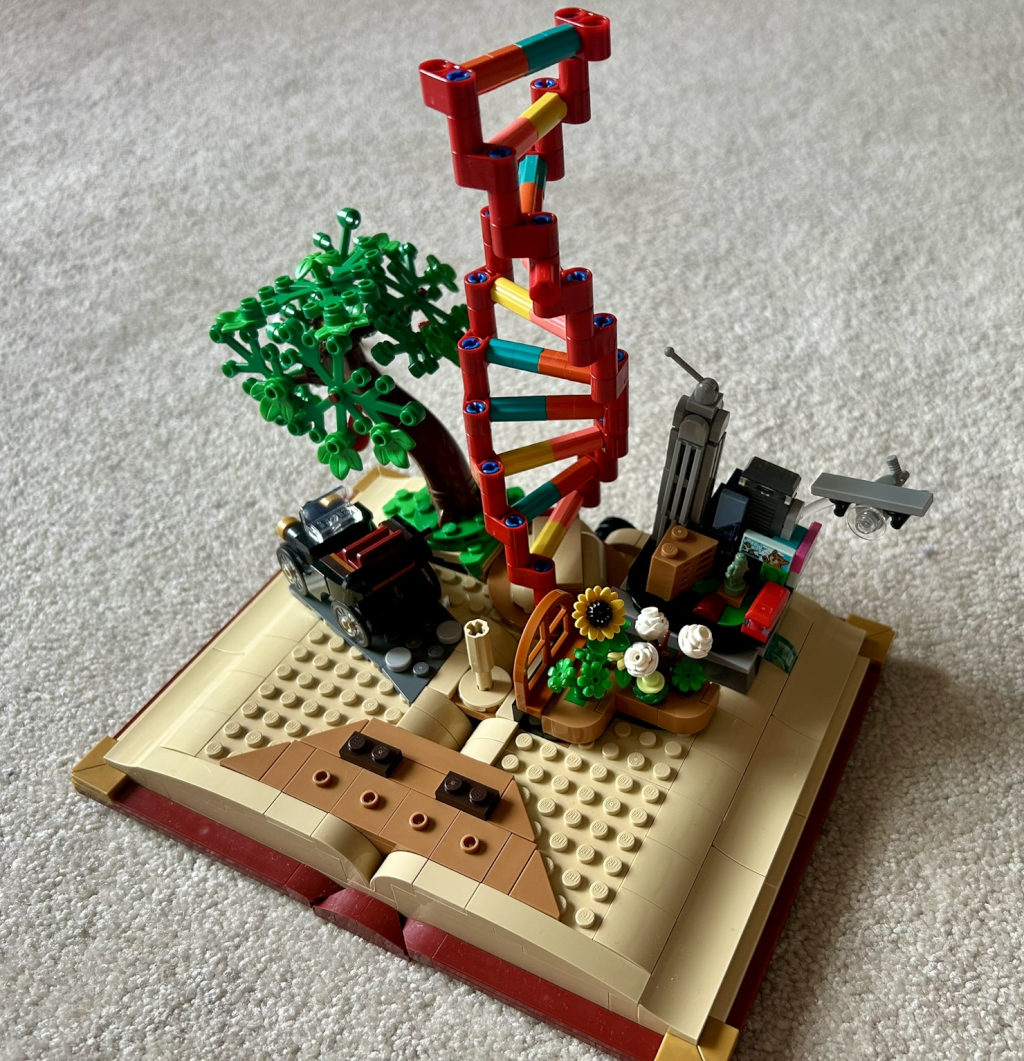
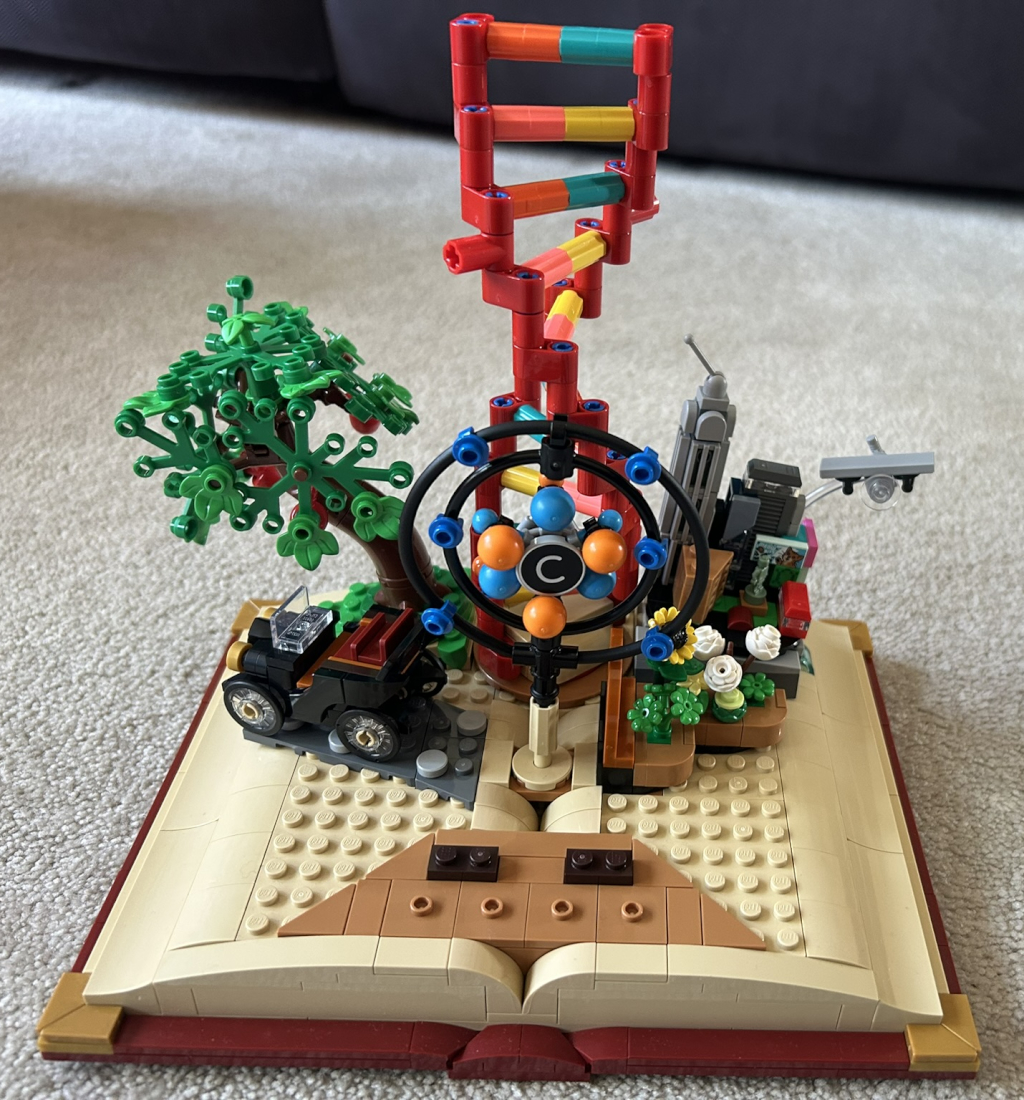
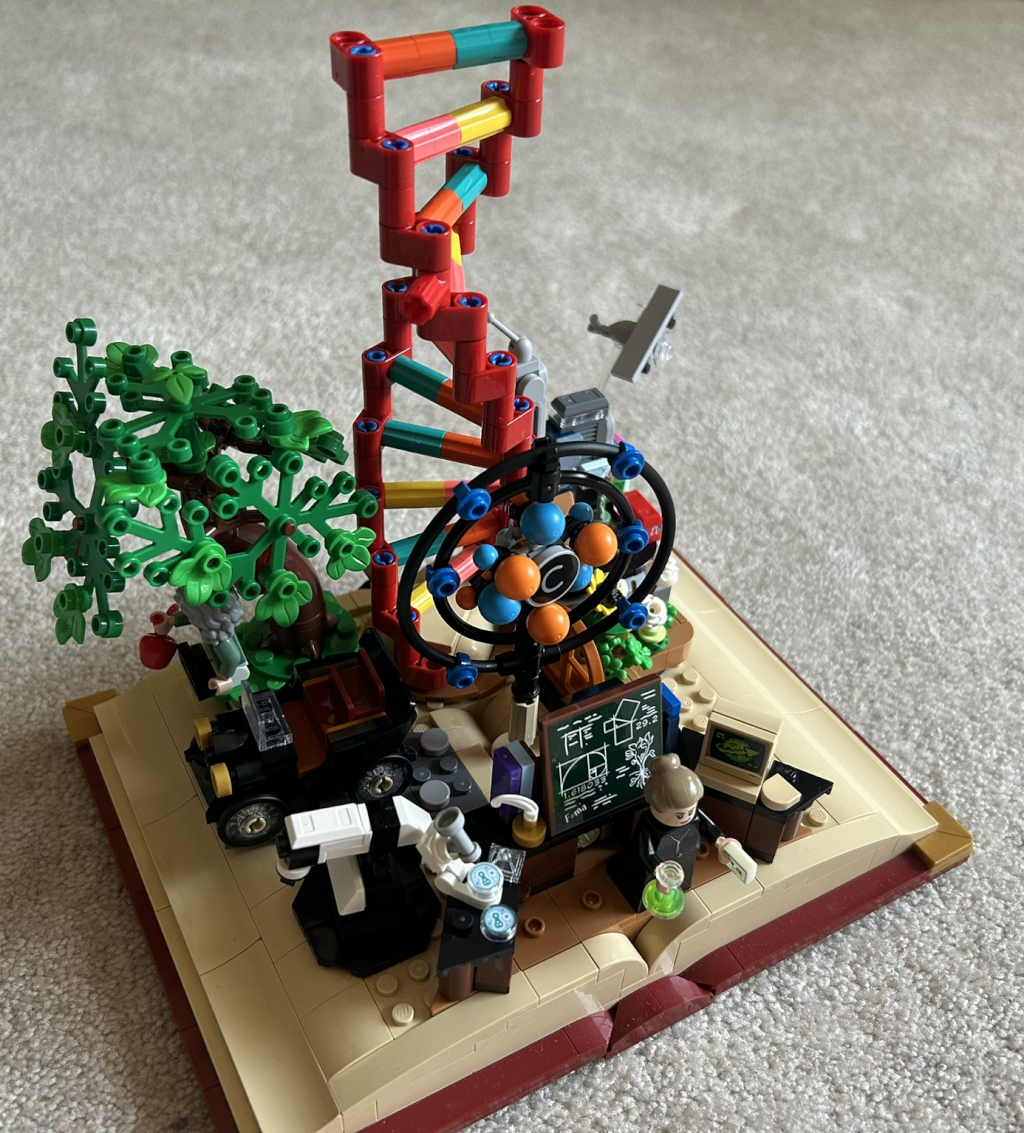
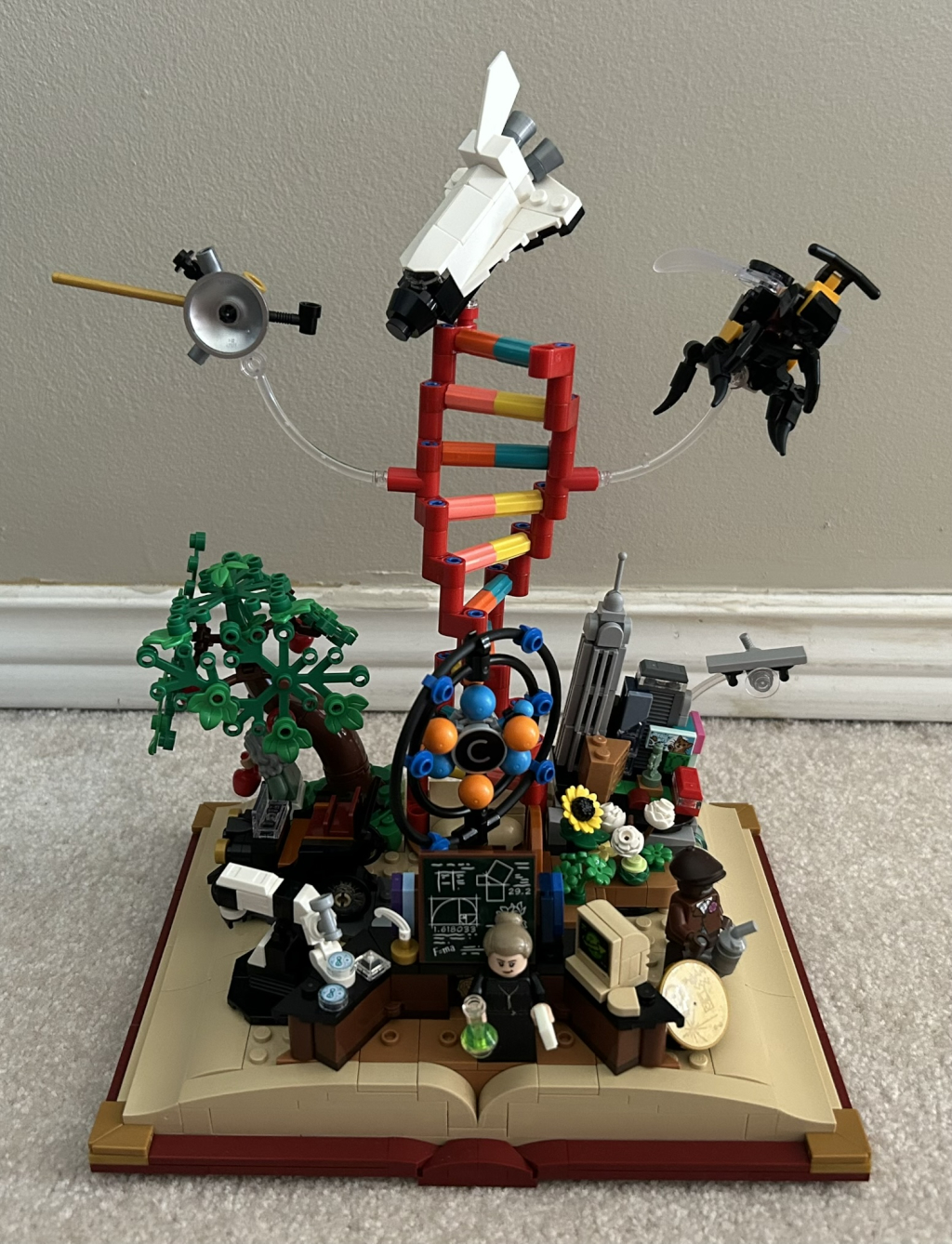
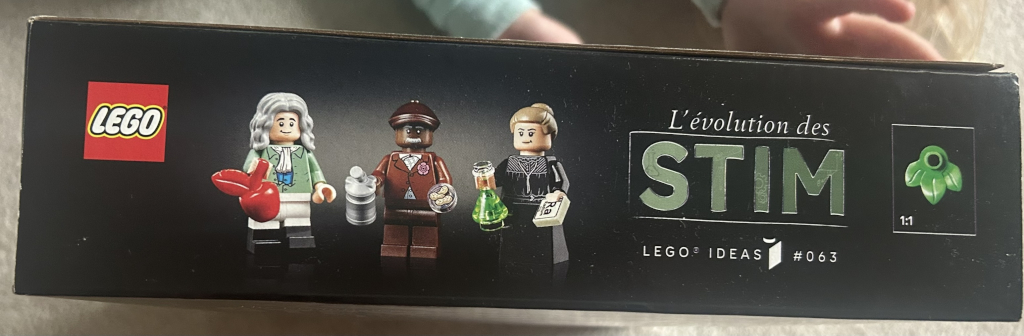
I am a big support of STEM (Science, Technology, Engineering & Mathematics), which likely doesn’t come as a surprise to anyone who has even had a brief encounter with me. My love of STEM goes back as far as I can remember. Which is why I was excited to see this LEGO set being released and thrilled to receive The Evolution of STEM for fathers day this year. I started working on this model in June and finished July 28th.
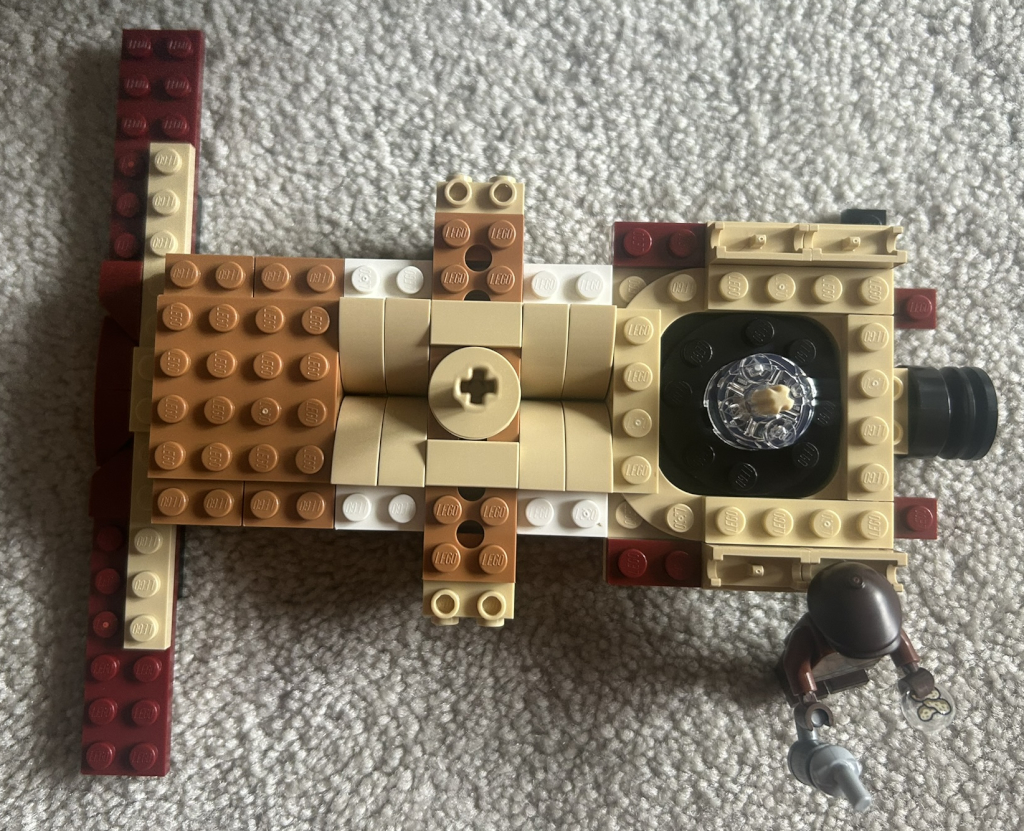
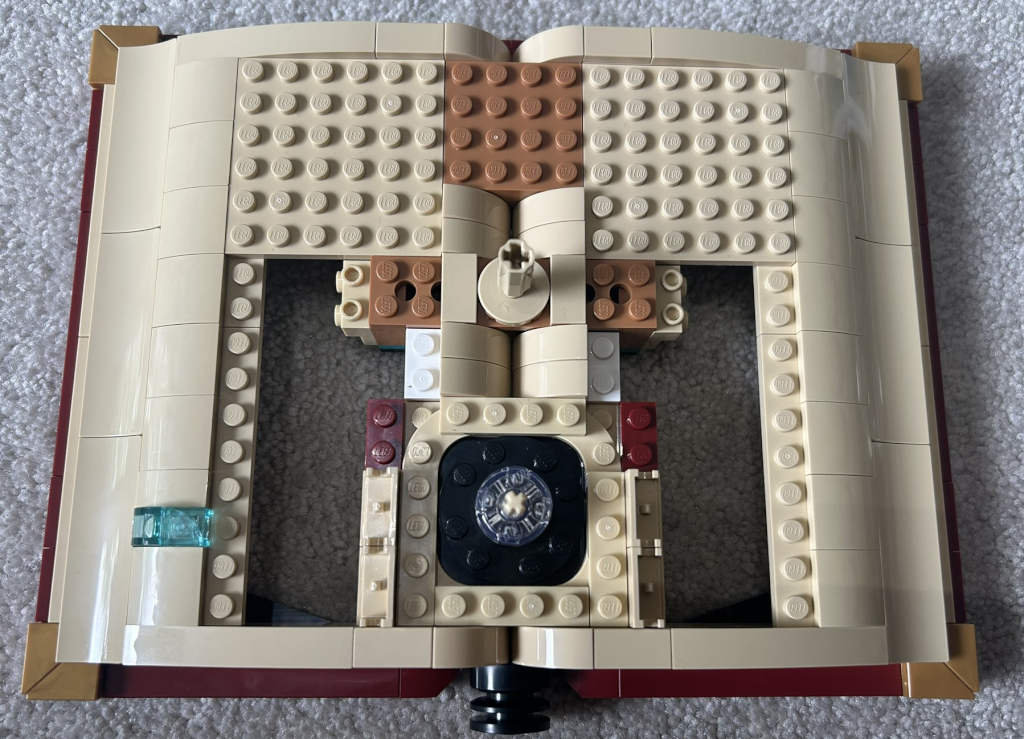
Bag 1 Completed Top View
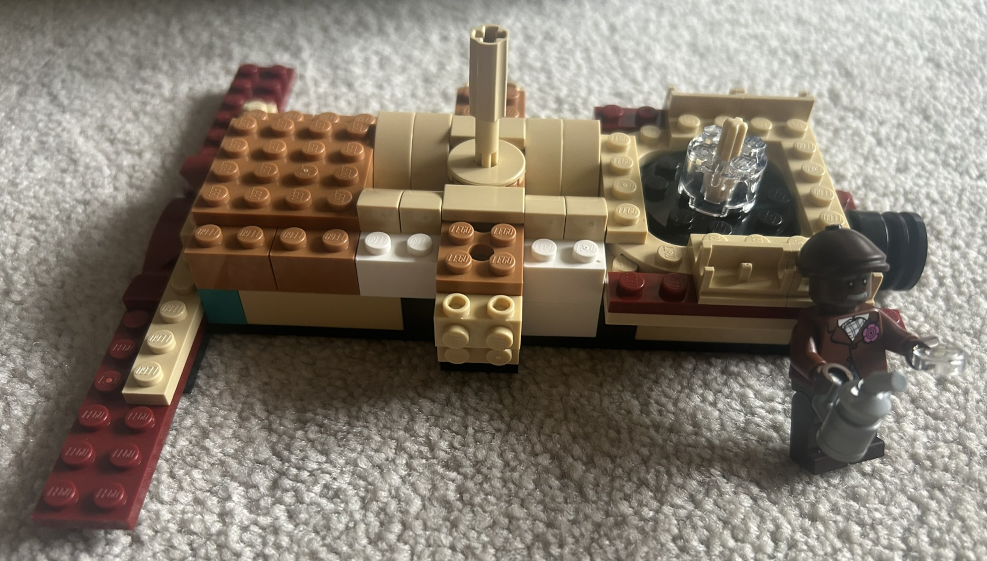
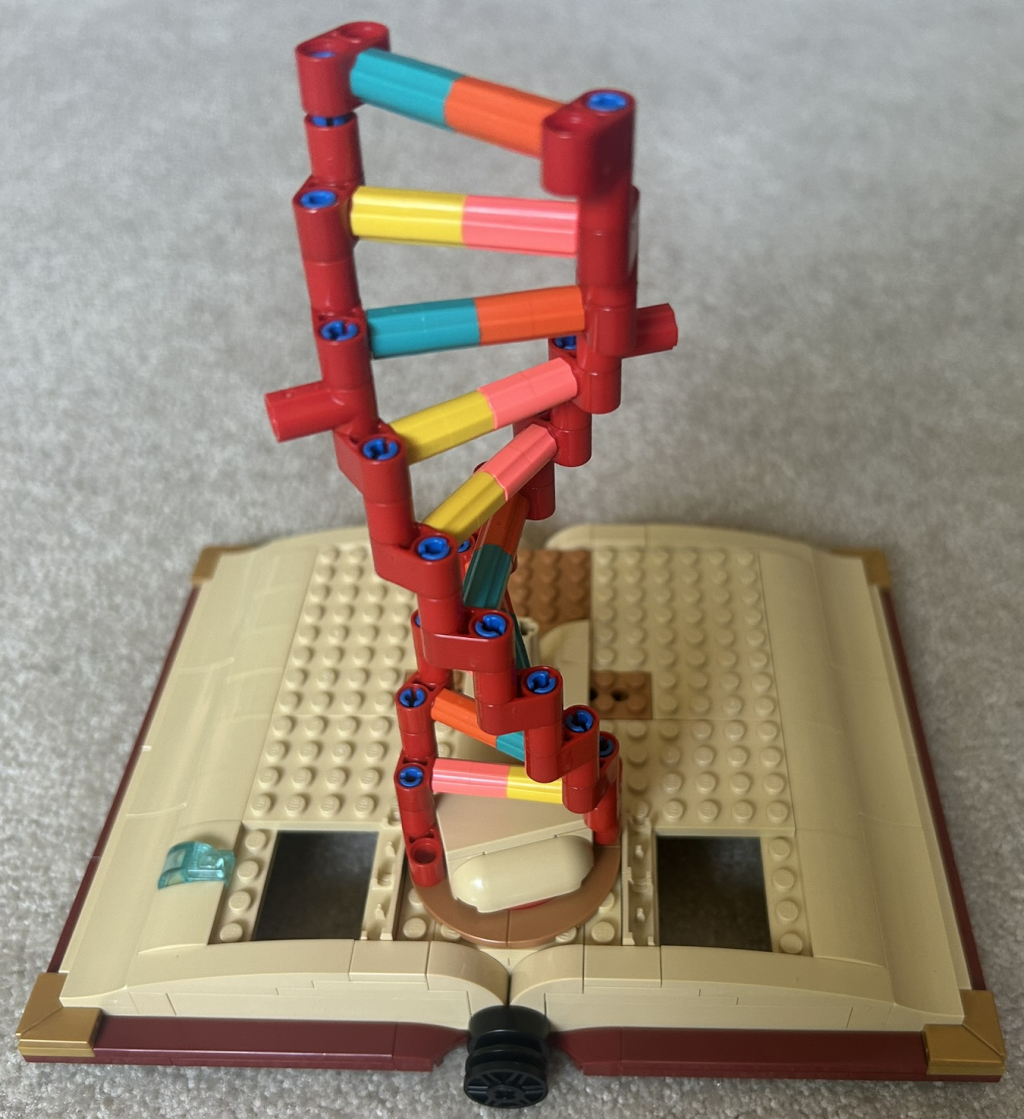
Bag 1 Completed Side View
Bag 2
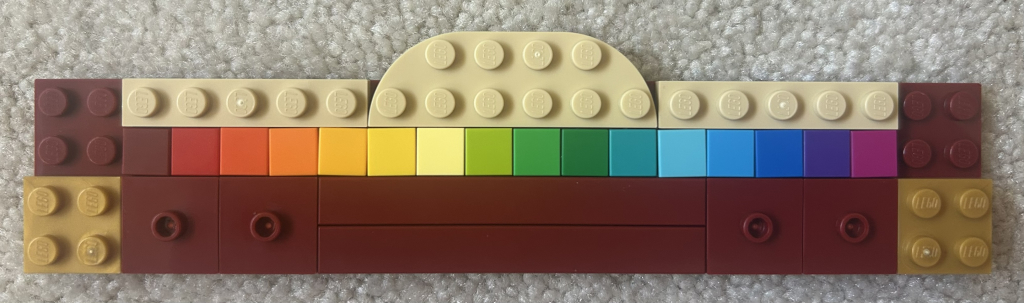
During the building of the base, which forms the shape of a book, you build two hidden gems, the first is a representation of the optical-light spectrum, showing colors ranging from ultraviolet to infrared. The human eye is only capable of seeing a portion of this.
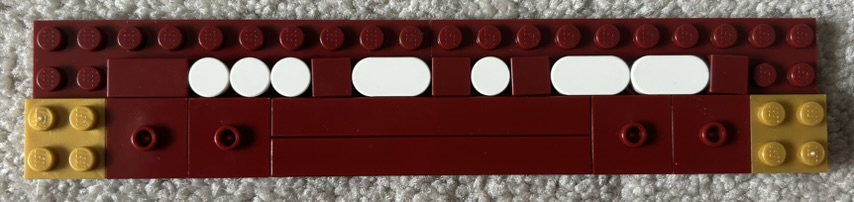
The second is a Morse Code message, invented in 1836 by Samuel Morse, which allowed long and short ‘beeps’ to be transmitted via wires or written as dots and dashes.
Bag 2 – Optical-light spectrum representation
Bag 2 – Morse Code
Bag 2 – Completed
Bag 3
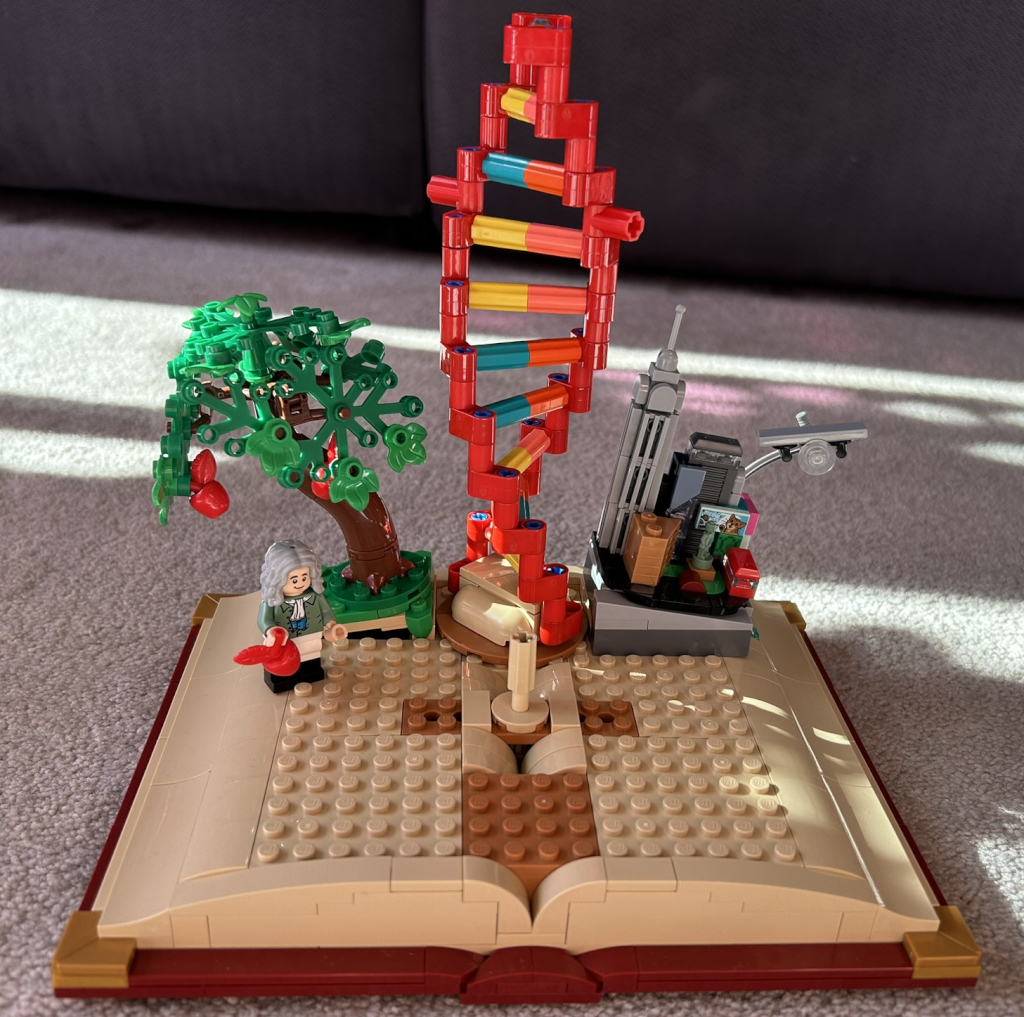
As part of the set you get to build Deoxyribonucleic acid (DNA), the language that is the genetic code for all lifeforms is ‘written’ in. DNA is formed of pairs of bases (A and T, C with G) bound together in a sequence forming a double helix structure. Human DNA consists of about 3 billion bases! The DNA structure forms a focal point on this model which rotates (see video) and has other scientific representations attached.
Bag 3 Completed
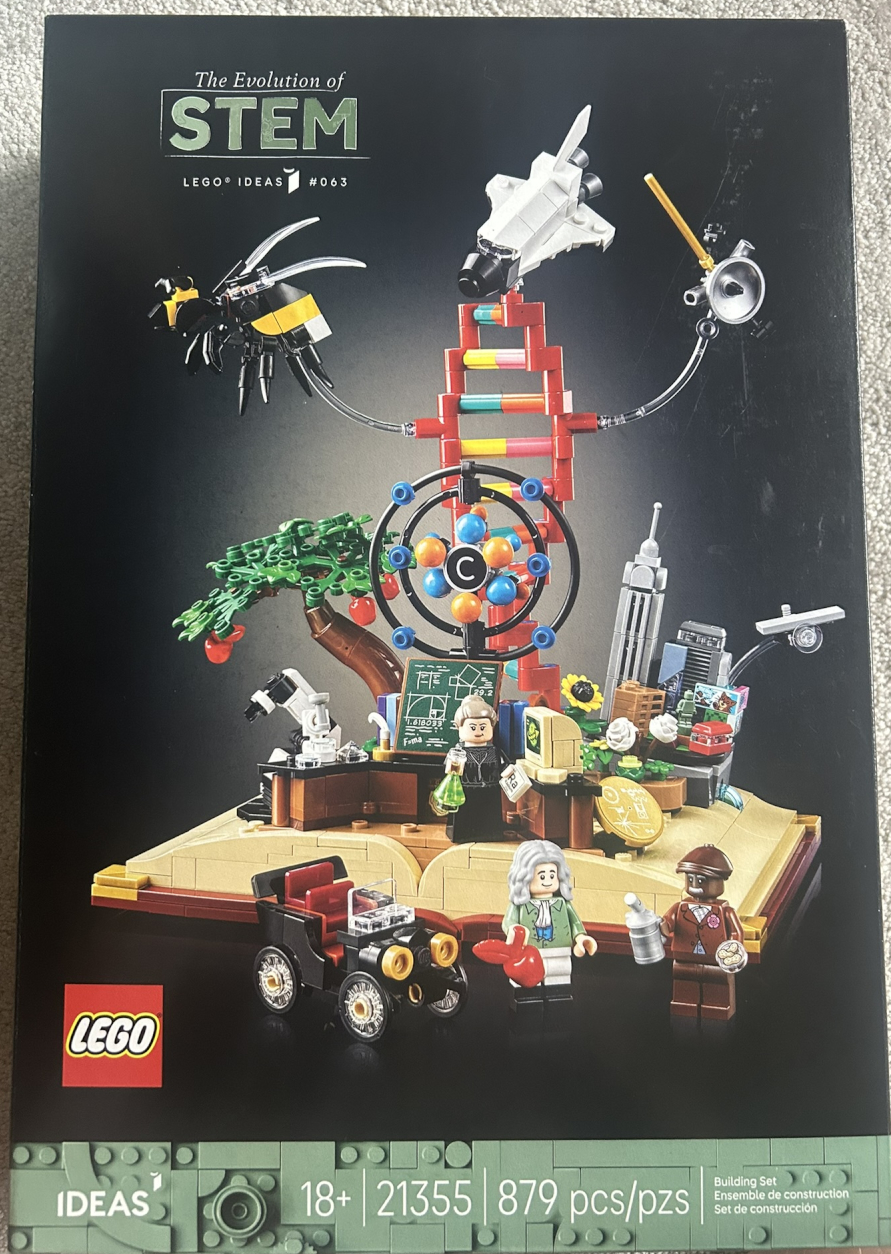
Box Front
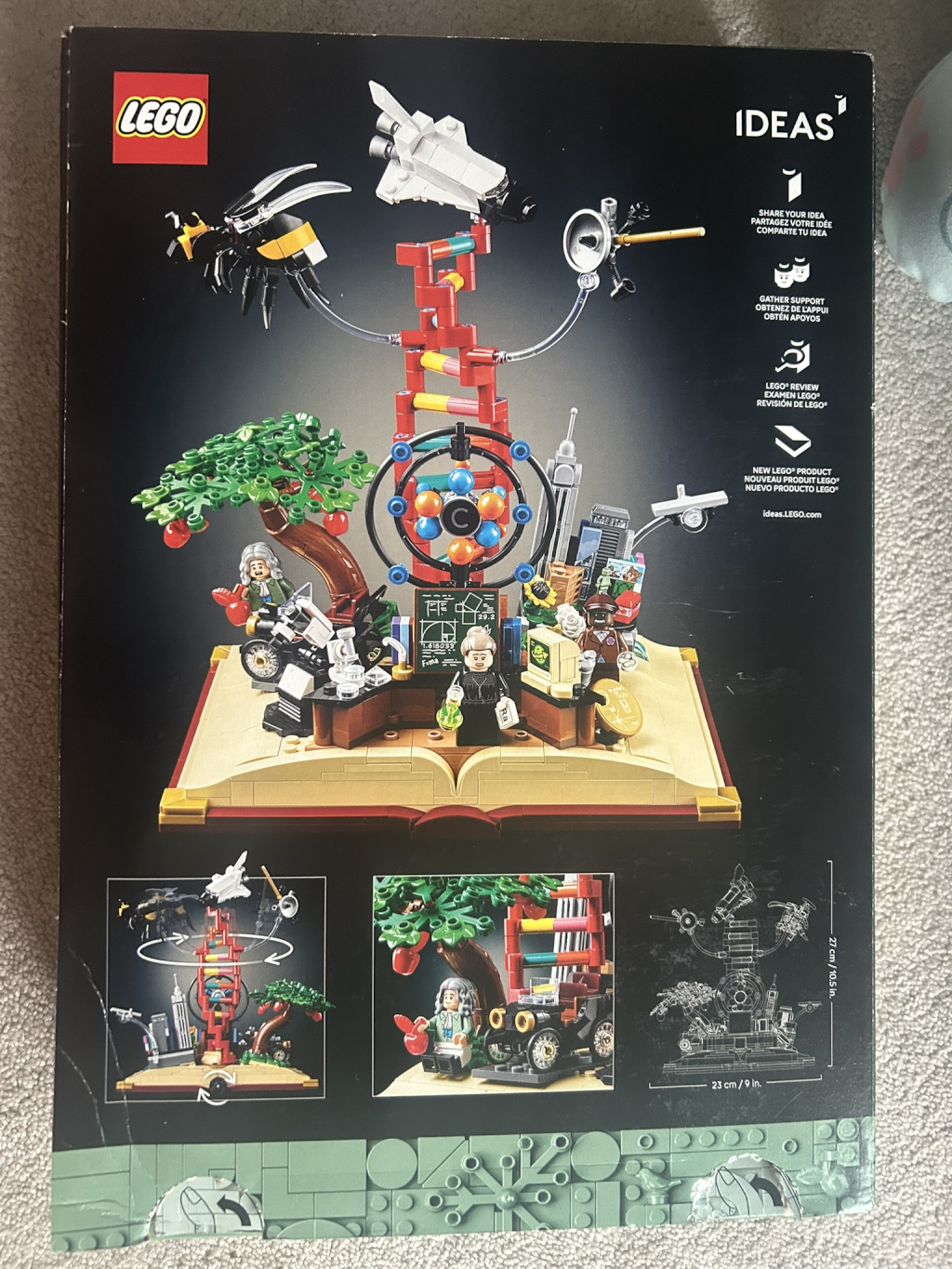
Box Back
Bag 4
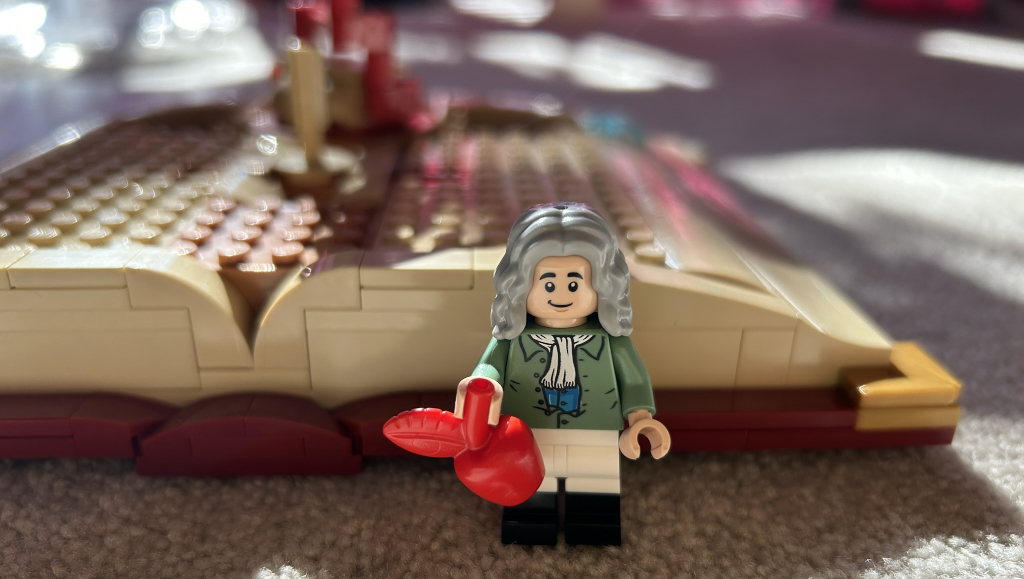
Here we build the apple tree that allegedly inspired Isaac Newton’s Theory of Gravity, now estimated to be over 400 years old, still thrives at the scientist’s family home in Lincolnshire, England. Sir Isaac lived from 1643-1727, an English polymath and a key figure in the Scientific Revolution during the Age of Enlightenment, formulating laws of motion and color theory through his work with light prisms.
Bag 4 – Sir Isaac Newton
Bag 4 Completed
Bag 5
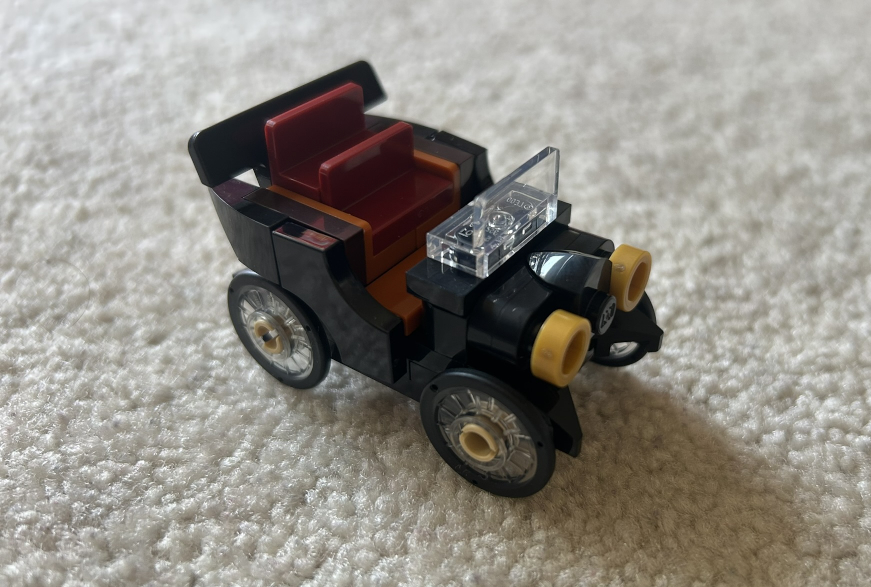
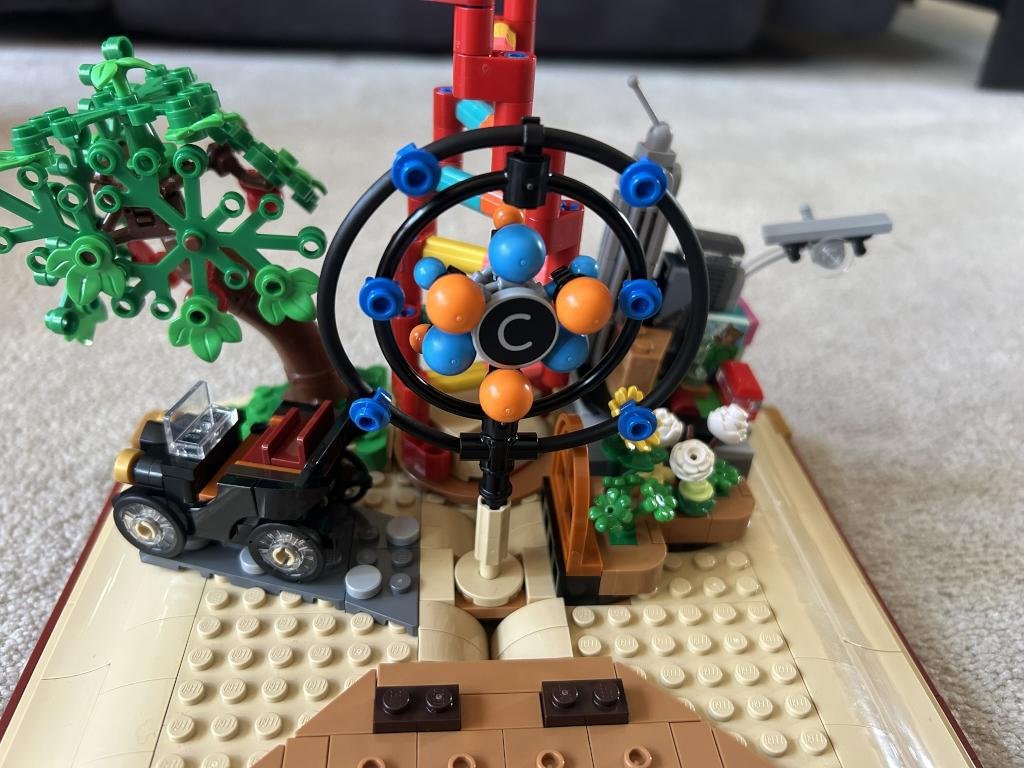
It is interesting how they incorporate pieces of science history into this build as we transition into building an early 1900s automobile model, these models became precursors to a more globalized world and the age of combustion and propelled travel. Incorporated is a garden and how George Washington Carver is attributed with creating 325 uses for peanuts, 108 applications for sweet potatoes and hundreds more for soybeans and pecans. You then build a a 3D replica of a carbon atom containing six neutrons, six protons and six electrons, on which all life on earth is based. The LEGO mechanics of this is neat as the carbon atom moves up an down while the DNA rotates.
Bag 5 – 1900s Automobile
Bag 5 – Carbon Atom
Bag 5 – George Washington Carver
Bag 5 Completed
Bag 6
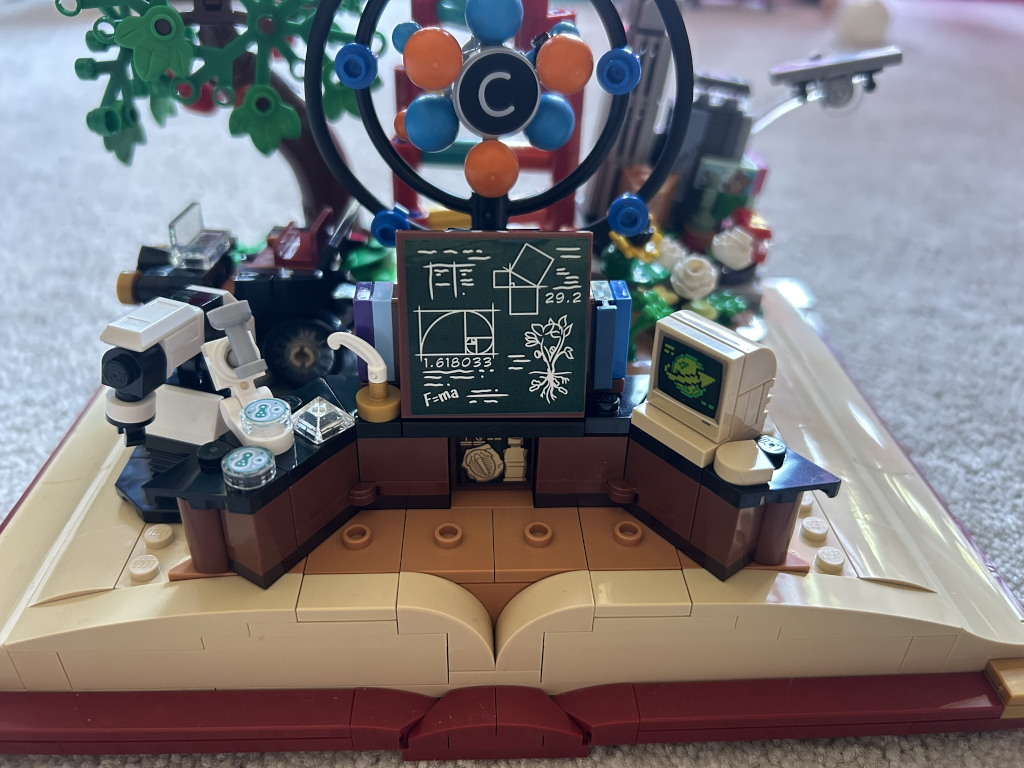
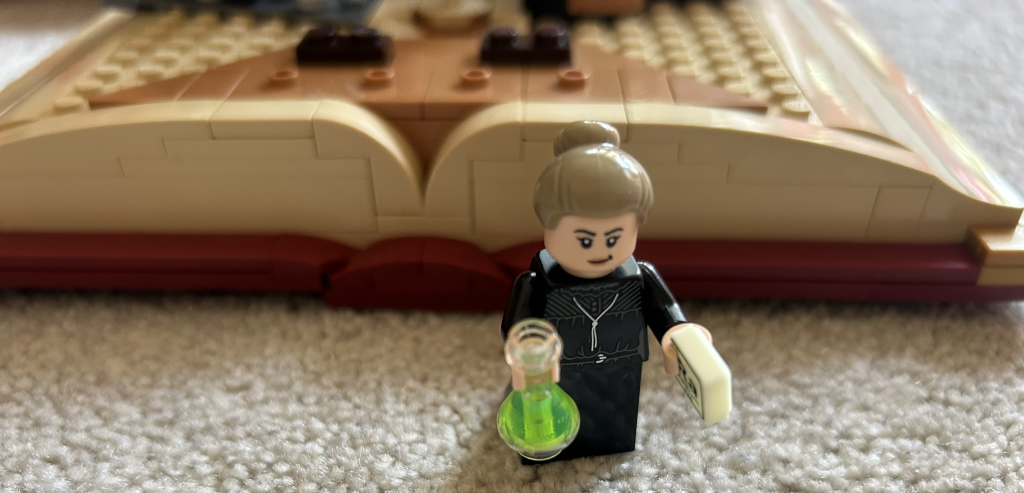
Introduces another pioneering scientist, Polish chemist Marie Curie who lived from 1867-1934, considered the mother of modern physics for her groundbreaking work with radium and radioactive materials. She became the first woman to win the Nobel Prize, and the first person to win two!
As part of the scientists ‘workstation’ you can see The Golden Ratio on the whiteboard, often referred to as the most beautiful number in the universe, derived from the Fibonacci numbers and is visible almost everywhere in nature, from the construction of cells to the orbit of planets.
Bag 6 – The Golden Ratio
Bag 6 – Marie Curie
Bag 6 Completed
Bag 7
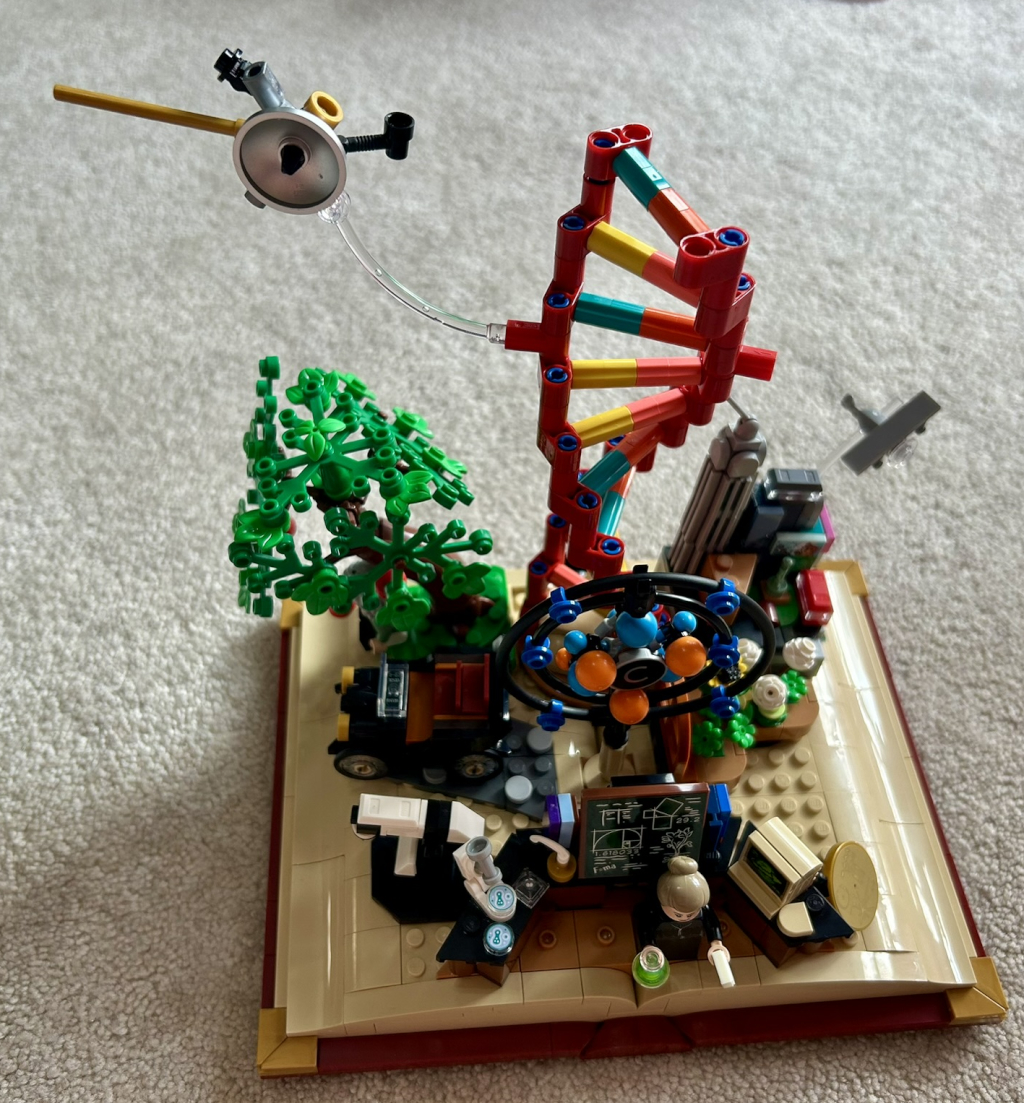
Brings us into outer space as we assemble the NASA Voyager 1 probe. The farthest human-made object from Earth and the first spacecraft to reach interstellar space. The ‘Golden Record’ aboard the Voyager probes feature audio greetings from Earth in 55 languages and a selection of music and sounds of nature.
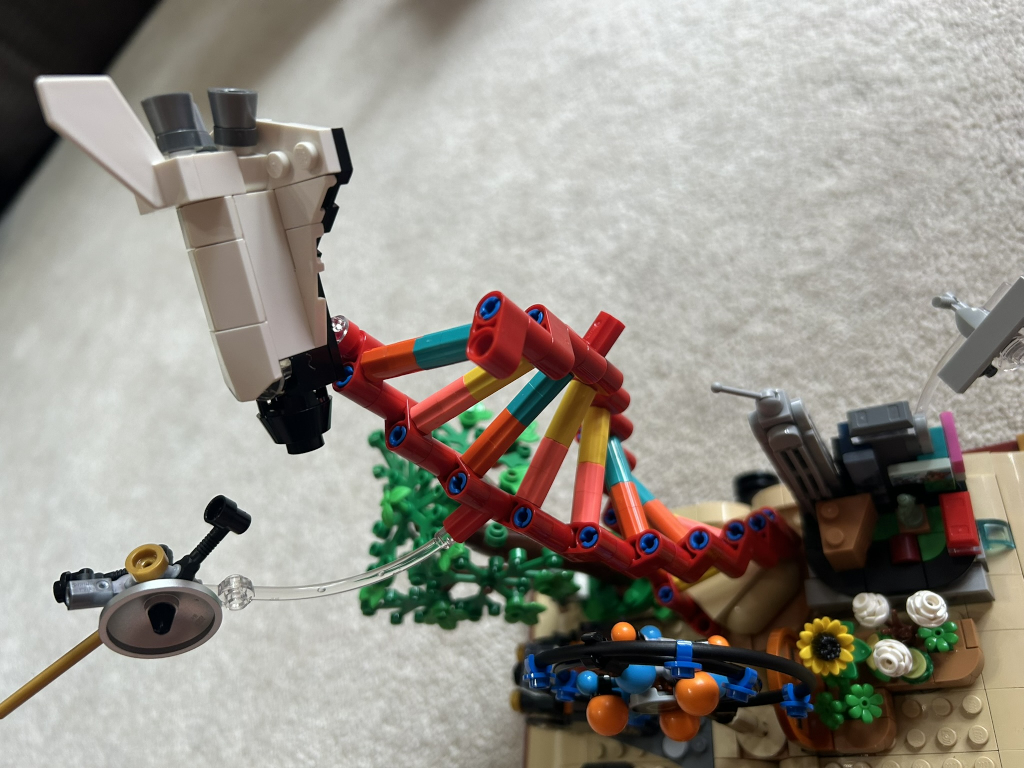
I got to build a miniature space shuttle out of LEGO, with hopes of a bigger version to come, celebrating humankind’s pioneering spirit to explore not just our own world but the entire universe. This also marks incredible achievements and discoveries with manned spaceflight.
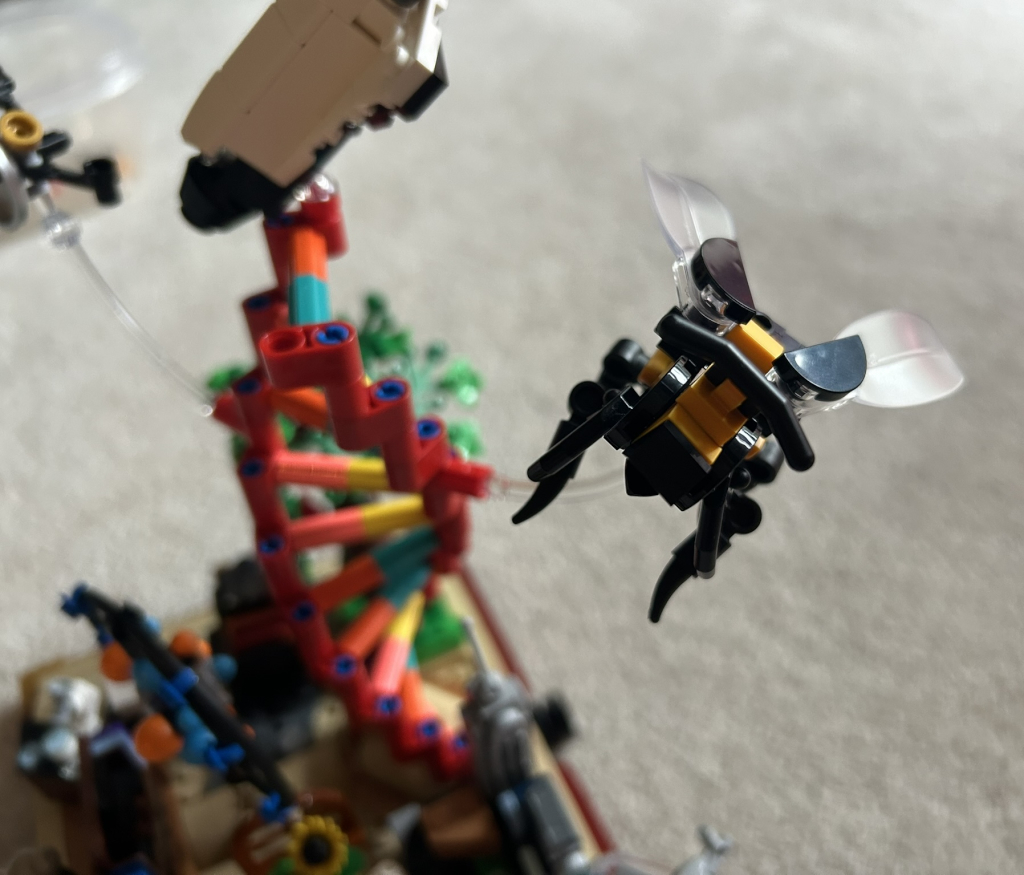
Our pollinating friend, the humble bumble bee, plays a vital part in maintaining a healthy, global ecosystem and biodiversity.
Bag 7 – Space Shuttle
Bag 7 – NASA Voyager 1
Bag 7 – Bumble Bee
Bag 7 Completed
I had other priorities since I started this post back in August, with work ramping up and more importantly spending time with my daughter and family in general… but I got it done and have images ready for making a post of the build I completed after this one! Stay tuned.